
The Cabinet of Dr. Caligari
| Director | Robert Wiene |
| Writer | Carl Mayer, Hans Janowitz |
| Cinematography | Willy Hameister |
| Music | Nicola Anders, Alfredo Antonini |
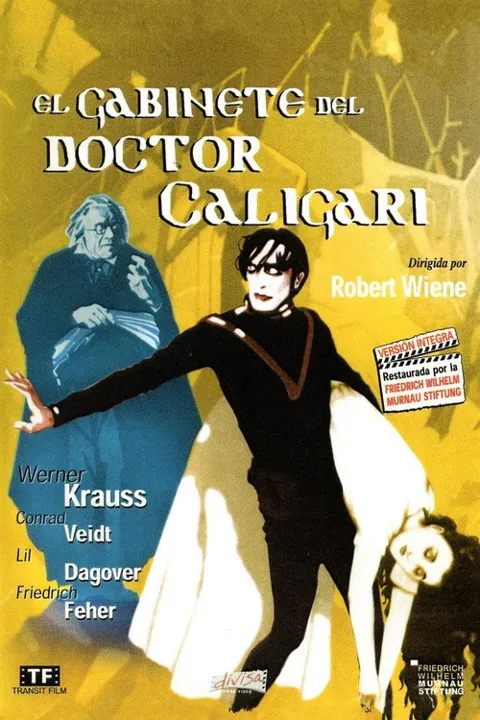
| Cast | Werner Krauss, Conrad Veidt, Friedrich Feher, Lil Dagover, Hans Heinrich von Twardowski |
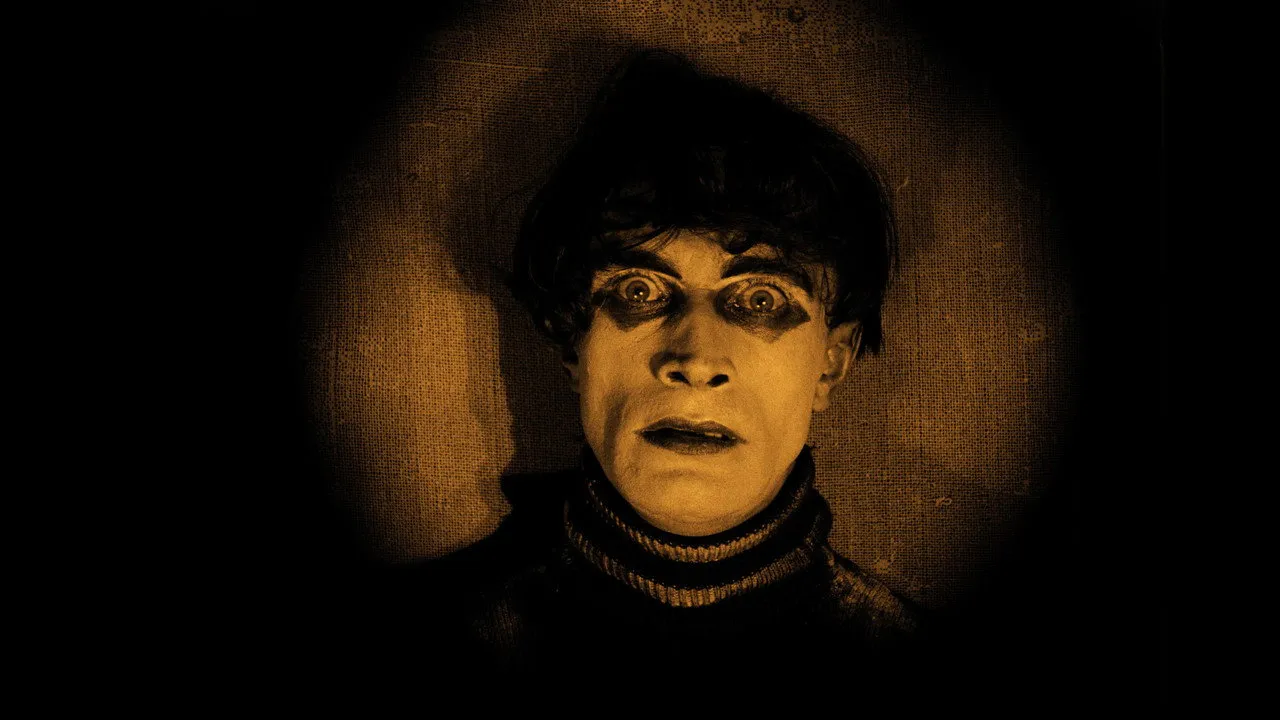
At a fair, the mysterious Dr. Caligari shows off Cesare, a somnambulist he claims can predict the future. Soon after, a series of murders begins in the town, and young Francis suspects Caligari is using Cesare to commit them.
| Copy | Complete · 75 of 67 min |
| Quality | HD |
| Version | German · With subtitles |
| Checked | 08/24/2026 |
Pros
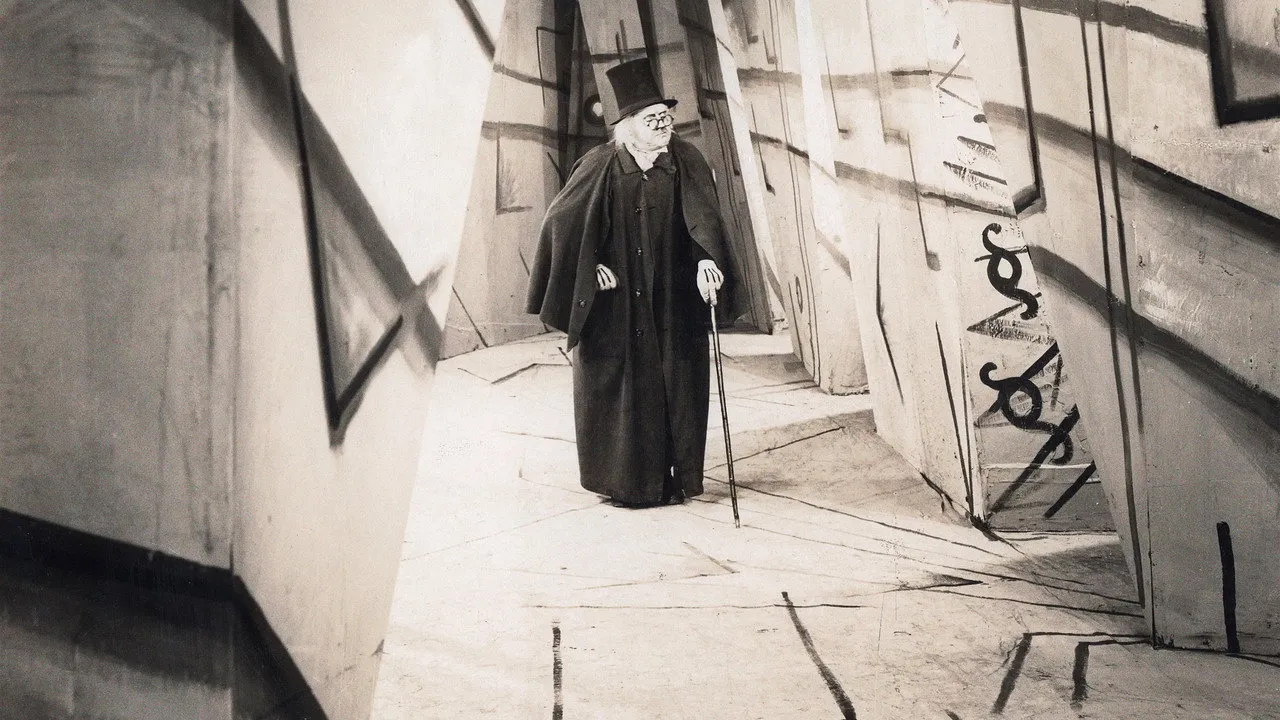
- The quintessential work of German Expressionism: painted sets of twisted lines, shadows and impossible angles.
- Roger Ebert called it arguably the first true horror film.
- Its twist ending and frame story were a novelty cinema has kept imitating ever since.
- 96% on Rotten Tomatoes; it influenced a generation of production designers in Germany and abroad.
Cons
- Some contemporary critics found it too stagey.
- Herbert Ihering and Blaise Cendrars objected that framing the story as a madman's delusion belittled Expressionism.
- Kurt Tucholsky faulted the mix of real actors and painted sets, which broke the stylization.
What the critics said
«Unanimous in praising Caligari as the first work of art on the screen»
Siegfried Kracauer · From Caligari to Hitler, 1947 · Source ↗
Kracauer's summary of its German critical reception, though he thought it too highbrow for wide audiences.
«The German critics, almost without exception, ranged from favourable to ecstatic»
David Robinson · Source ↗
The historian contradicts the notion of a hostile reception.
«Cartoon and [a] reproduction of designs rather than from what actually took place on stage»
Helmut Grosse · Source ↗
The harshest voice against its aesthetic, which he called clichéd and derivative.
«The first true horror film»
Roger Ebert · Source ↗
A retrospective view of its founding place in the genre.
Famous quotes
«I must know everything. I must penetrate the heart of his secret! I must become Caligari!»
The asylum director · PlayPhrase ↗ · QuoDB ↗
«You fools, this man is plotting our doom! We die at dawn! He is Caligari!»
Francis · PlayPhrase ↗ · QuoDB ↗
«Everywhere there are spirits ... They are all around us ... They have driven me from hearth and home, from my wife and children.»
Man in the garden · PlayPhrase ↗ · QuoDB ↗
«Look! There is Cesare. Never ask him to tell your fortune; it will mean death for you.»
Francis · PlayPhrase ↗ · QuoDB ↗
Quotes: Wikiquote (CC BY-SA)
Famous scenes
At the fair, Caligari opens a coffin-like box and awakens the somnambulist before the crowd.
Cesare tells Alan he will die by dawn. Janowitz said it was inspired by the sudden death of an actress friend.
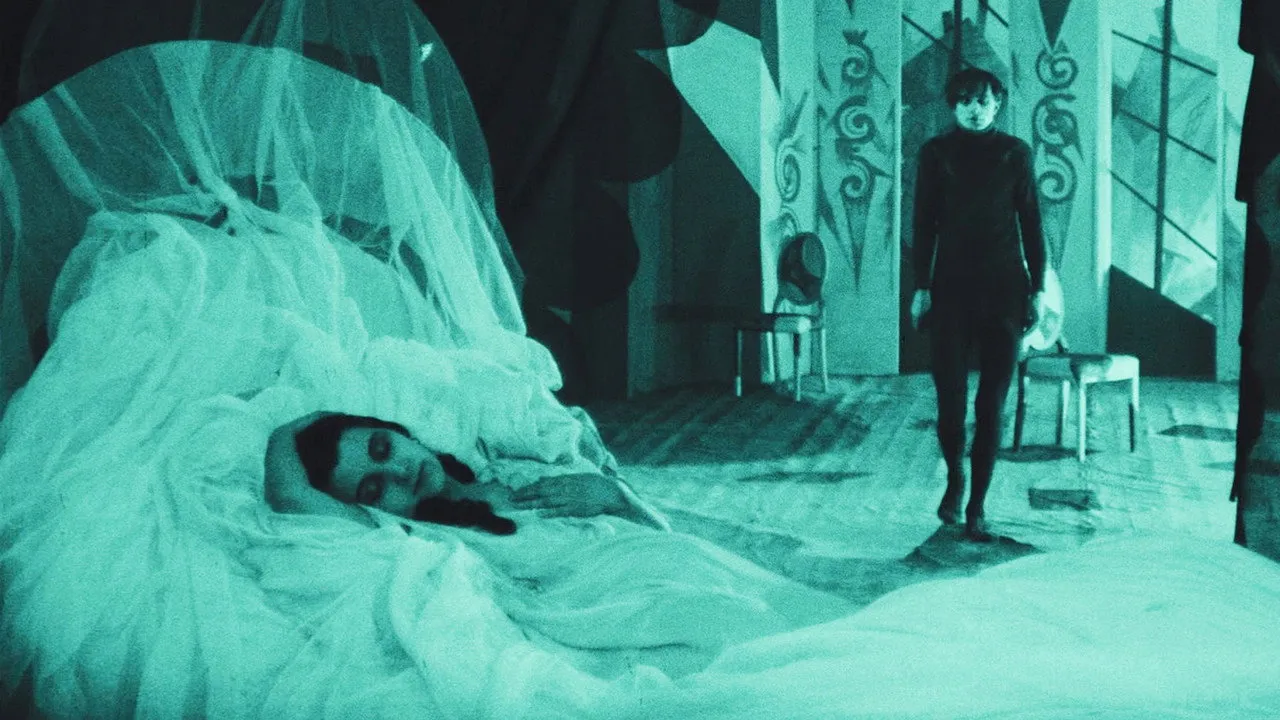
Cesare raises a knife over Jane but, instead of killing her, abducts her through the window.
Gallery
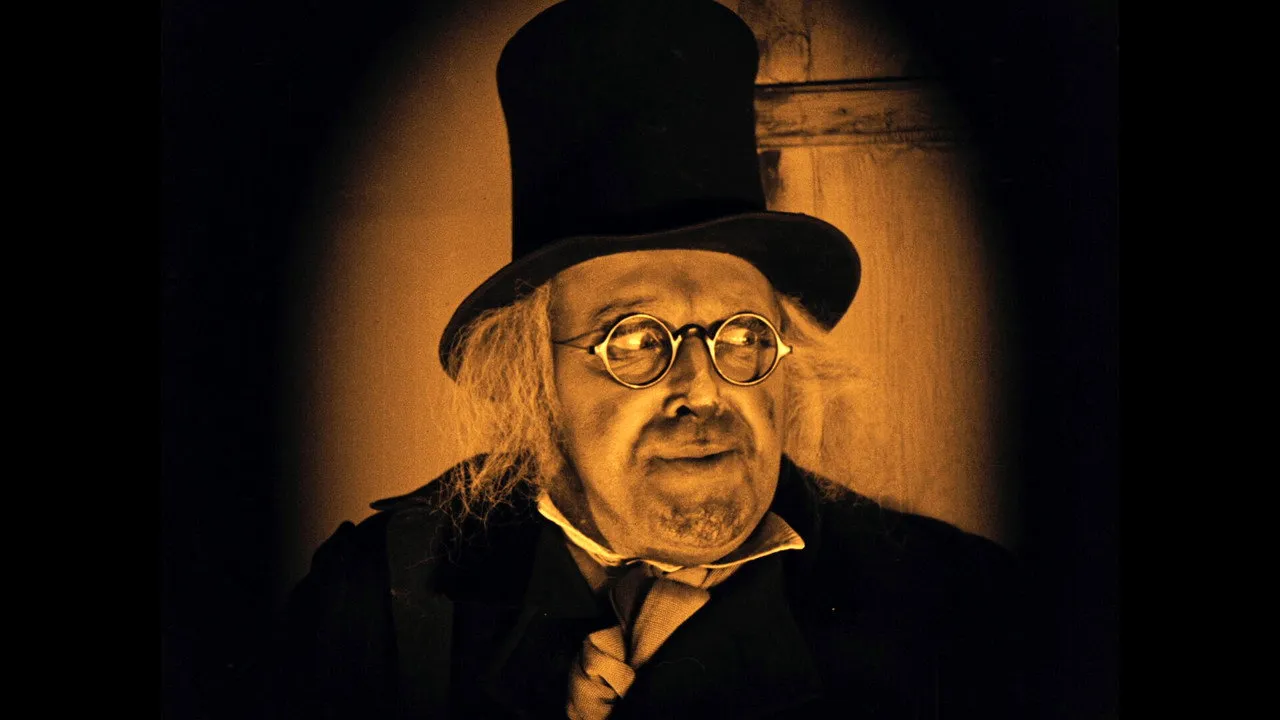
Stills: TMDb
True or false?
The sets' Expressionist style was chosen purely for artistic reasons.
Connections in the catalog
Budget and box office
| Budget (1920) | $12,371 |
| Today's equivalent | ≈ $198,721 |
Adjusted for inflation using the US CPI
Technical details and shooting
| Image | Black and white |
| Languages | Silent |
| Sets | Hermann Warm, Walter Reimann and Walter Röhrig, linked to Der Sturm magazine |
| Shooting | Entirely in the studio, with no exteriors, unusual for the time |
| Studio | Erich Pommer's Decla-Film; the script came via Fritz Lang |
| Controversy | Kracauer argued the original script had no frame story |
Wikipedia (EN) · Wikipedia (ES) · Wikiquote · Wikidata · IMDb · TMDb
Analysis prepared with AI assistance from these sources. Quotes are checked word for word against the original text. How we build these pages →