
The Seventh Seal
| Director | Ingmar Bergman |
| Writer | Ingmar Bergman |
| Cinematography | Gunnar Fischer |
| Music | Erik Nordgren |
| Cast | Max von Sydow, Gunnar Björnstrand, Bengt Ekerot, Nils Poppe |
Sweden, 14th century. After a decade in the Crusades, the knight Antonius Block returns home with his squire as the Black Death sweeps the land. Death is waiting for him on the shore, and Block challenges it to a game of chess to buy time and seek answers about God and the meaning of life.
| Copy | Complete · 92 of 96 min |
| Quality | SD |
| Version | Swedish · No subtitles |
| Checked | 08/24/2026 |
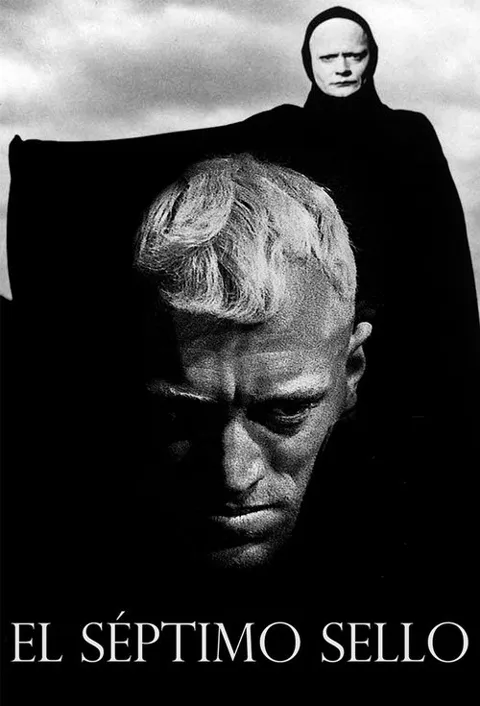
Pros
- Special Jury Prize at Cannes 1957 and 2nd in Cahiers du Cinéma's top ten of the year (1958).
- Very strong critical consensus: 93% on Rotten Tomatoes and 88 out of 100 on Metacritic.
- Ranked in the Sight & Sound polls of 2002, 2012 and 2022, including among directors.
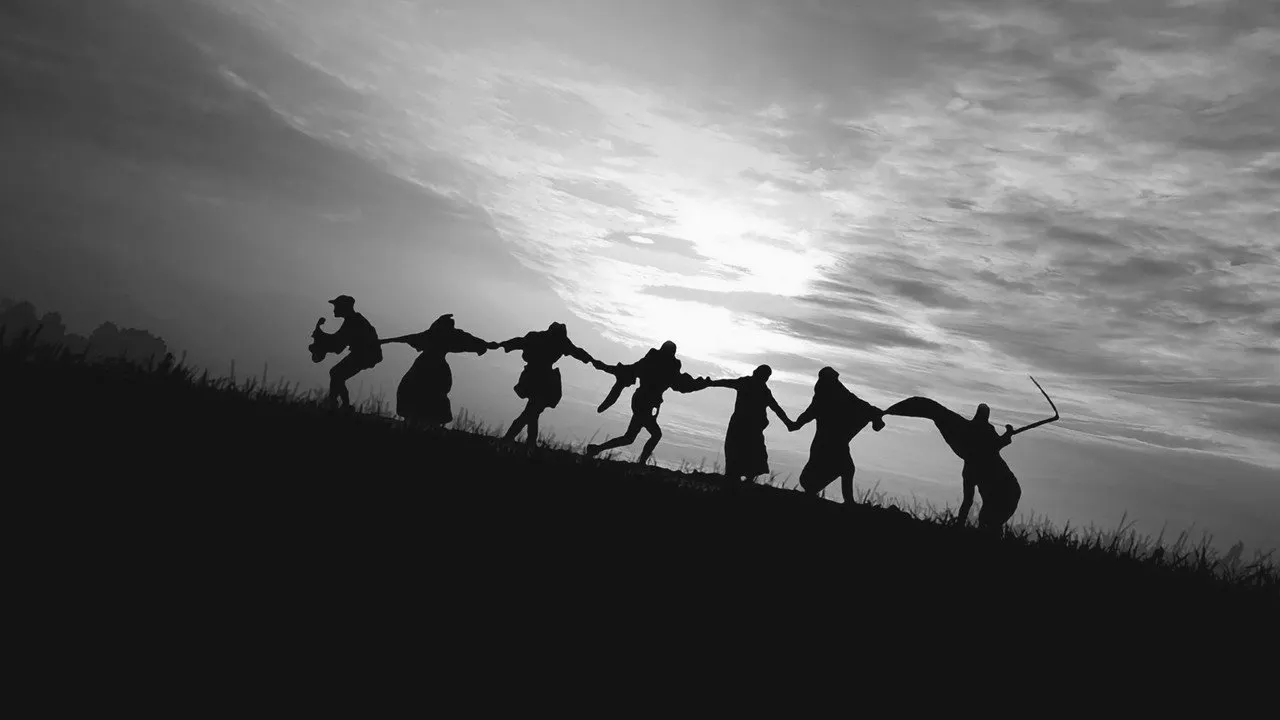
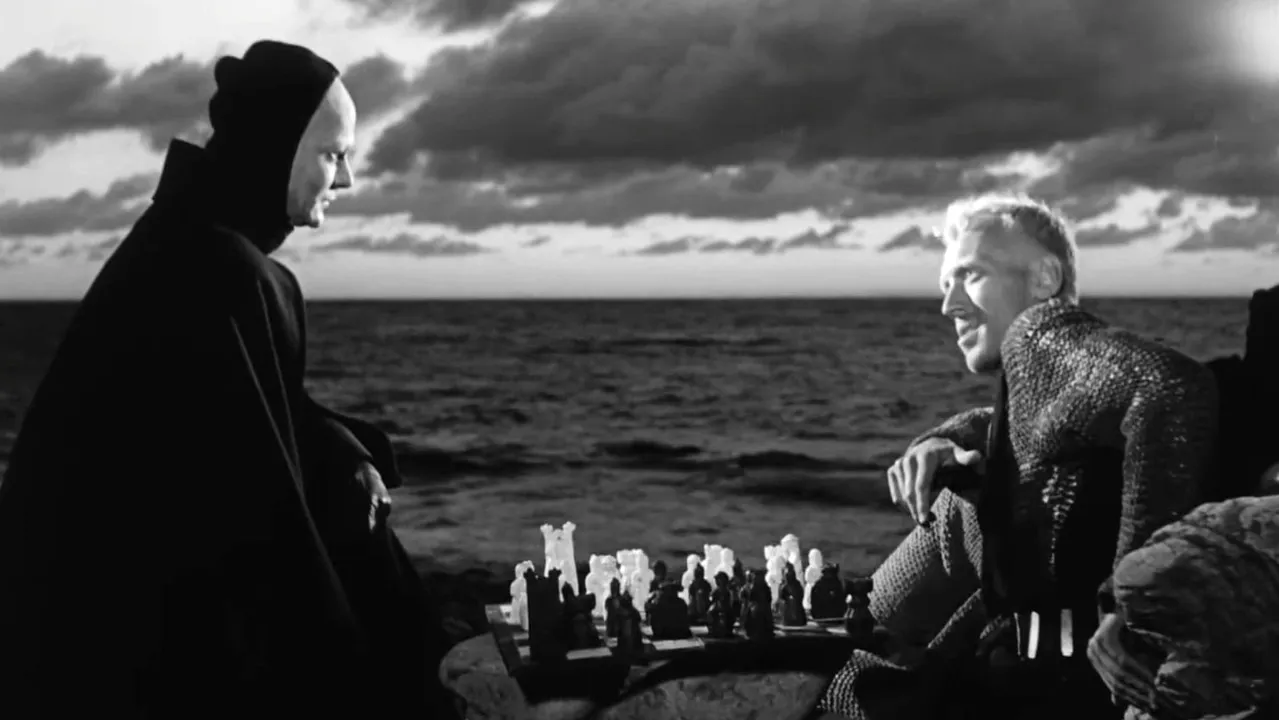
- Images that belong to film history: the chess game with Death and the final dance against the horizon.
Cons
- Its Swedish premiere split critics: they praised the cinematography and attacked Bergman the screenwriter.
- An allegorical, solemn tone that asks a lot of viewers looking for light entertainment.
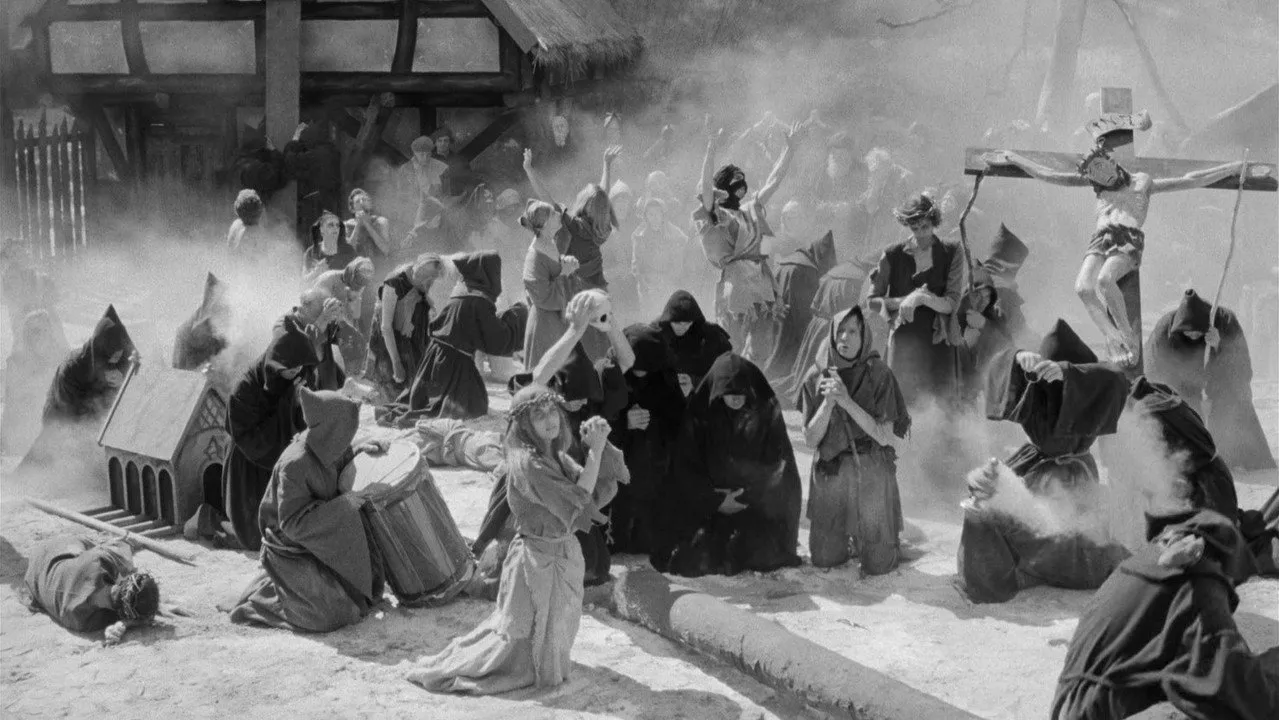
- Medieval historians find its recreation of the period only partly convincing.
- It has slipped in the Sight & Sound critics' poll: 35th in 2002 and 93rd in 2012.
What the critics said
«A magically powerful film.»
Pauline Kael · Source ↗
Unreserved praise from one of the most demanding critics of her time.
«Mr. Bergman uses his camera and actors for sharp, realistic effects.»
Bosley Crowther · The New York Times, 1958 · Source ↗
Highlights the visual realism, striking in such an allegorical film.
«It is a story told as a sermon might be delivered.»
Melvyn Bragg · BFI Film Classics · Source ↗
Points to its preaching tone: a virtue for some, a flaw for others.
«Treats death as a bitter and hopeless joke.»
Gerald Mast · A Short History of the Movies · Source ↗
Agrees with Bragg on its gravity but stresses the irony of the squire Jöns.
«A universal, timeless allegory.»
Aleksander Kwiatkowski · Swedish Film Classics · Source ↗
Today's dominant reading, which explains its staying power in the great lists.
«A series of seven films that explored the possibility of faith in a post-Holocaust, nuclear age.»
America · revista jesuita · Source ↗
Places it at the start of Bergman's religious cycle and in its historical context.
«A horror film for children.»
Hanserik Hjertén · Arbetaren, 1957 · Source ↗
The harshest voice at its Swedish premiere, in contrast with its reception abroad.
«Only partially succeeds in conveying the period atmosphere and thought world of the fourteenth century.»
John Aberth · A Knight at the Movies · Source ↗
A historian's critique: it questions the medieval recreation, not the artistic merit.
Famous quotes
«I am Death.»
Death · PlayPhrase ↗ · QuoDB ↗
«My condition is that I may live as long as I resist you. If I checkmate you, you set me free.»
Antonius Block · PlayPhrase ↗ · QuoDB ↗
«I want knowledge. Not belief. Not supposition. But knowledge.»
Antonius Block · PlayPhrase ↗ · QuoDB ↗
«Perhaps there is no one there.»
Death, disguised as a priest · PlayPhrase ↗ · QuoDB ↗
«We must make an idol of our fear, and that idol we shall call God.»
Antonius Block · PlayPhrase ↗ · QuoDB ↗
«To believe is to suffer. It is like loving someone in the dark who never answers.»
Antonius Block · PlayPhrase ↗ · QuoDB ↗
«Will you never stop asking questions?»
Death · PlayPhrase ↗ · QuoDB ↗
«It is finished.»
The girl · PlayPhrase ↗ · QuoDB ↗
Quotes: Wikiquote (CC BY-SA)
Famous scenes
Block challenges Death on the rocky beach of Hovs Hallar; the image that defines the film.
At dawn, the juggler sees the Virgin and Child, and nobody believes him.
Block reveals his chess strategy to a priest who turns out to be Death.
A meal in the countryside that is the film's only moment of peace and communion.
The condemned dance in silhouette against the horizon, led by Death.
Gallery
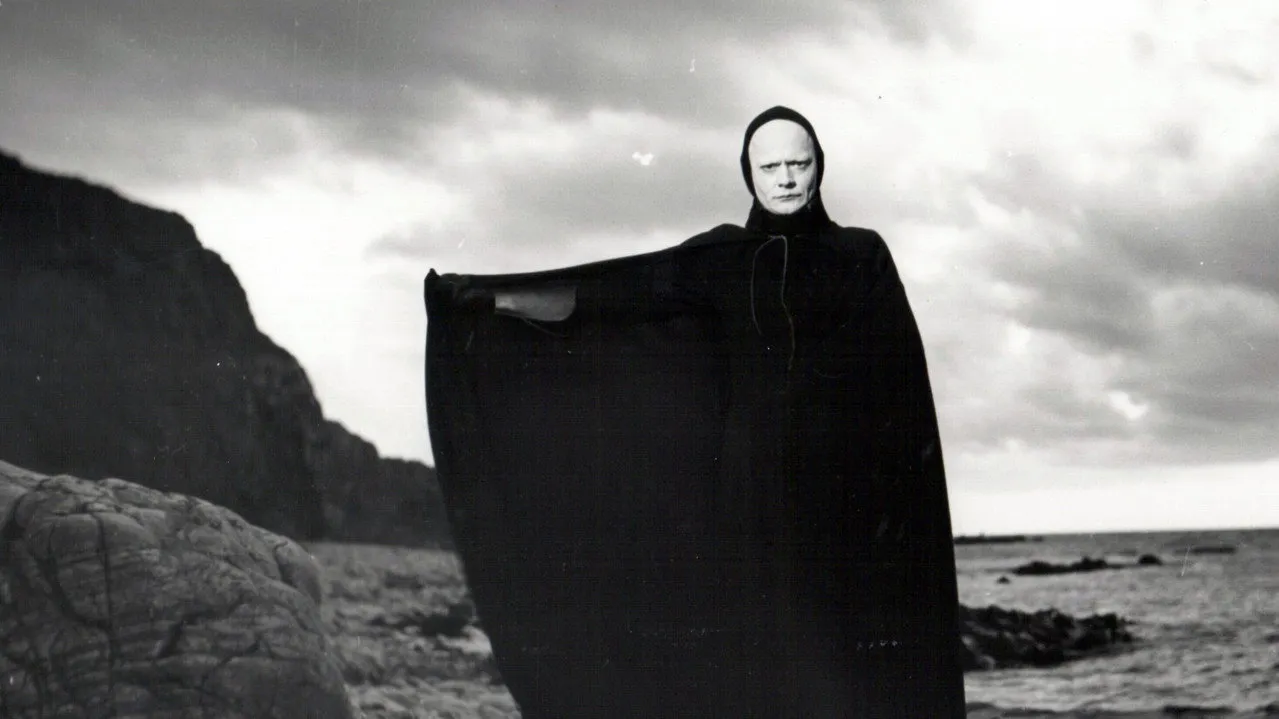
Stills: TMDb
True or false?
The famous dance of death at the end is performed by the film's lead actors.
Connections in the catalog
In the great lists
| Sight & Sound 2022 · directors | 72nd |
| Sight & Sound 2012 · critics / directors | 93rd / 75th |
| Sight & Sound 2002 · critics / directors | 35th / 31st |
| Cahiers du Cinéma · top ten of 1958 | 2nd |
| Village Voice · best films of the century (1999) | 33rd |
| BBC · 100 greatest foreign-language films (2018) | 30th |
| Time Out · 100 best movies (2021) | 43rd |
| Roger Ebert · The Great Movies | Included (2000) |
Budget and box office
| Budget (1957) | $150,000 |
| Today's equivalent | ≈ $1.7 million |
Adjusted for inflation using the US CPI
Technical details and shooting
| Image | Black and white |
| Languages | Swedish |
| Release | 16 February 1957 (Sweden) |
| Shooting | 35 days · Filmstaden studios (Solna) and Hovs Hallar beach (Scania) |
| Script | Bergman rewrote it five times; he began it while recovering at the Karolinska Hospital |
| Production | Svensk Filmindustri, which only approved it after the Cannes success of Smiles of a Summer Night |
Script and source material
| Based on | Wood Painting (Trämålning), a one-act play by Bergman himself (1953–1954) |
| Published script | The Seventh Seal: a film (Simon and Schuster, Modern Film Scripts series, 1960). Also in Four Screenplays of Ingmar Bergman (Simon and Schuster, 1960) |
Wikipedia (EN) · Wikipedia (ES) · Wikiquote · Wikidata · IMDb · TMDb · BFI · Sight & Sound
Analysis prepared with AI assistance from these sources. Quotes are checked word for word against the original text. How we build these pages →