
Modern Times
| Director | Charles Chaplin |
| Writer | Charles Chaplin |
| Cinematography | Ira H. Morgan, Roland Totheroh |
| Music | Charles Chaplin |
| Cast | Charles Chaplin, Paulette Goddard, Henry Bergman, Tiny Sandford, Chester Conklin |
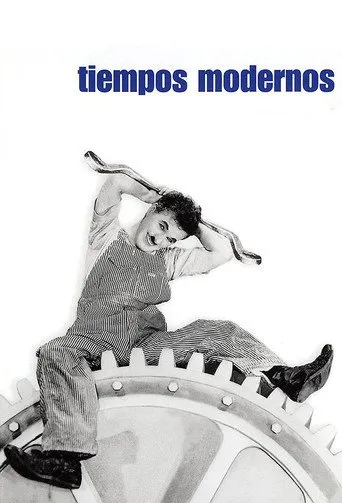
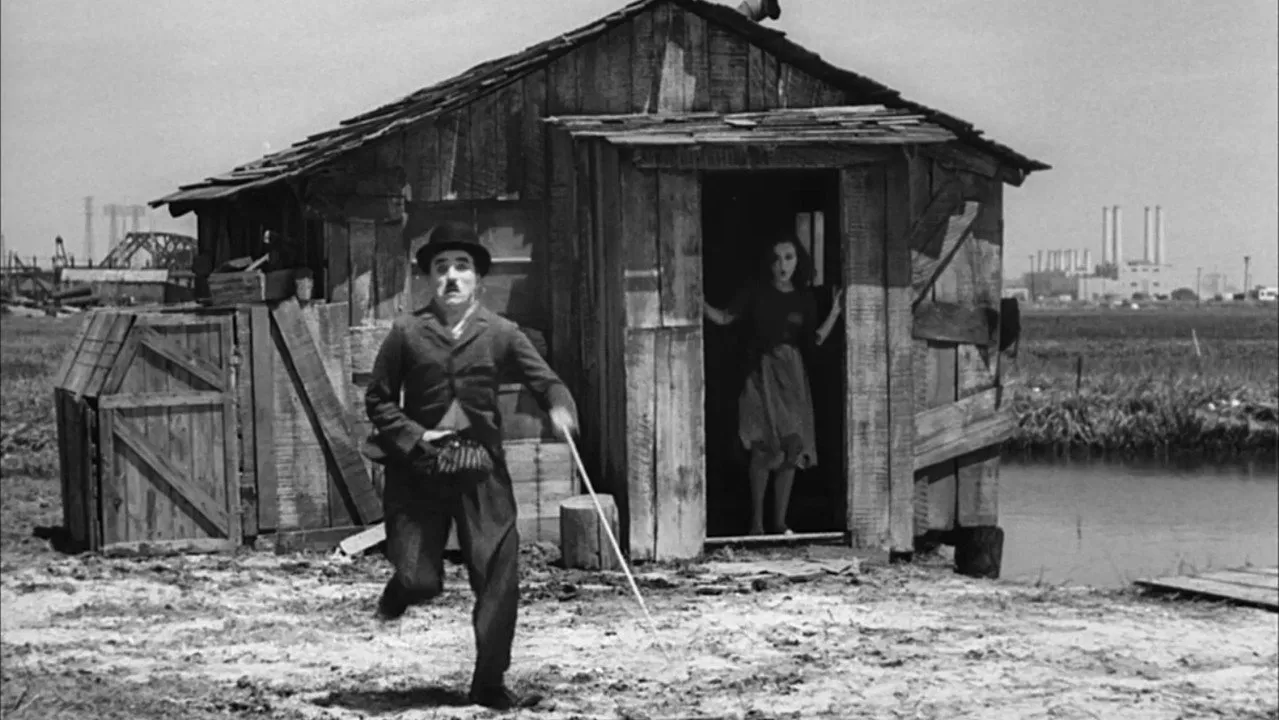
During the Great Depression, the Tramp works on an assembly line until the pace of the machines drives him mad. Between layoffs, arrests and short-lived jobs, he meets a young orphan with whom he tries to make his way in a mechanized world that has no place for them.
| Copy | Complete · 87 of 87 min |
| Quality | HD |
| Version | English · No subtitles |
| Checked | 08/24/2026 |
Pros
- It is the Tramp's last appearance, and Chaplin made it a farewell full of his best gags.
- The assembly line and the feeding machine remain two of the most famous comic routines in film.
- Its critique of industrial dehumanization still feels current.
- 98% on Rotten Tomatoes and one of the first 25 films in the National Film Registry.
Cons
- In 1936, with sound well established, it was still almost silent, a choice many saw as old-fashioned.
- It is structured as a string of episodes; The New Yorker called it a somewhat rambling sketch.
- Some routines run longer than needed.
What the critics said
«Time has not changed his genius.»
Frank Nugent · The New York Times, 1936 · Source ↗
Argues that Chaplin was right to stay true to his silent Tramp in the sound era.
«Has at last definitely entered the contemporary scene»
Graham Greene · The Spectator, 1936 · Source ↗
The novelist praises Chaplin, often tied to the past, for portraying his own time.
«A rambling sketch, a little at loose ends at times»
John Mosher · The New Yorker · Source ↗
The most quoted reservation on release, though the review also praises its big laughs.
«A slapstick skewering of industrialized America, Modern Times is as politically incisive as it is laugh-out-loud hilarious.»
Rotten Tomatoes · consenso de la crítica · Source ↗
Today's reading: comedy and social critique weigh the same.
Famous scenes
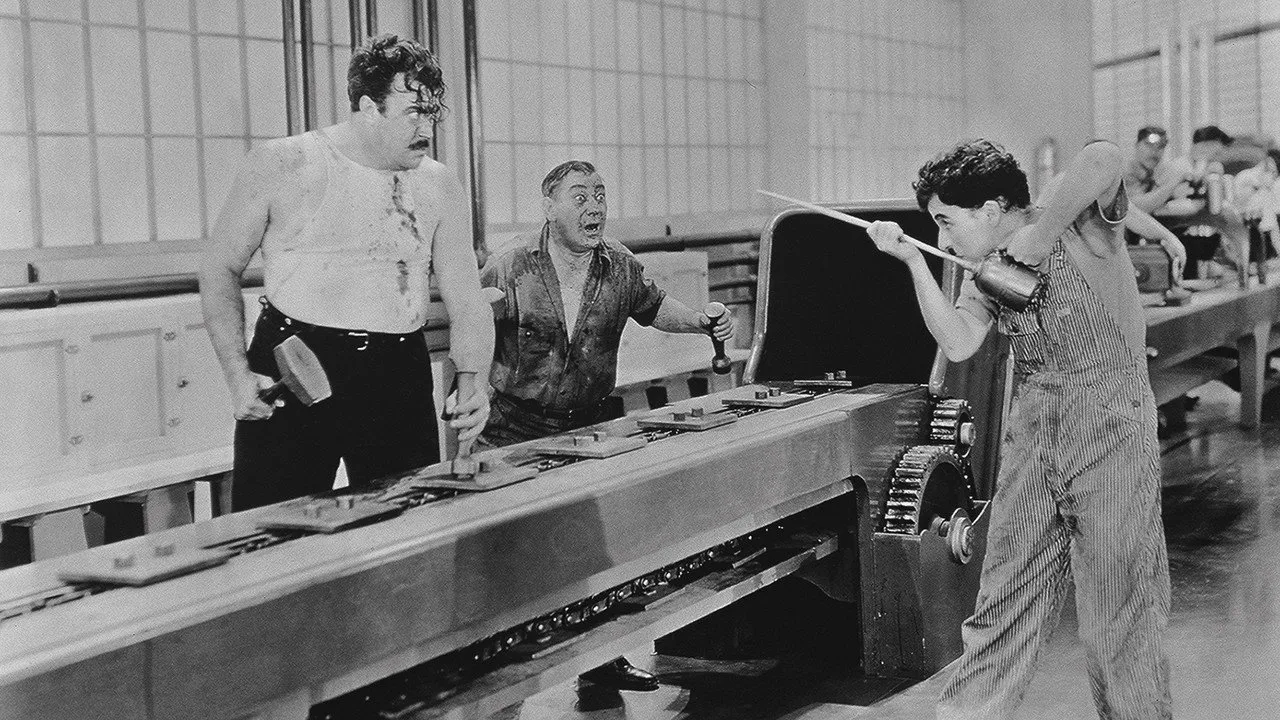
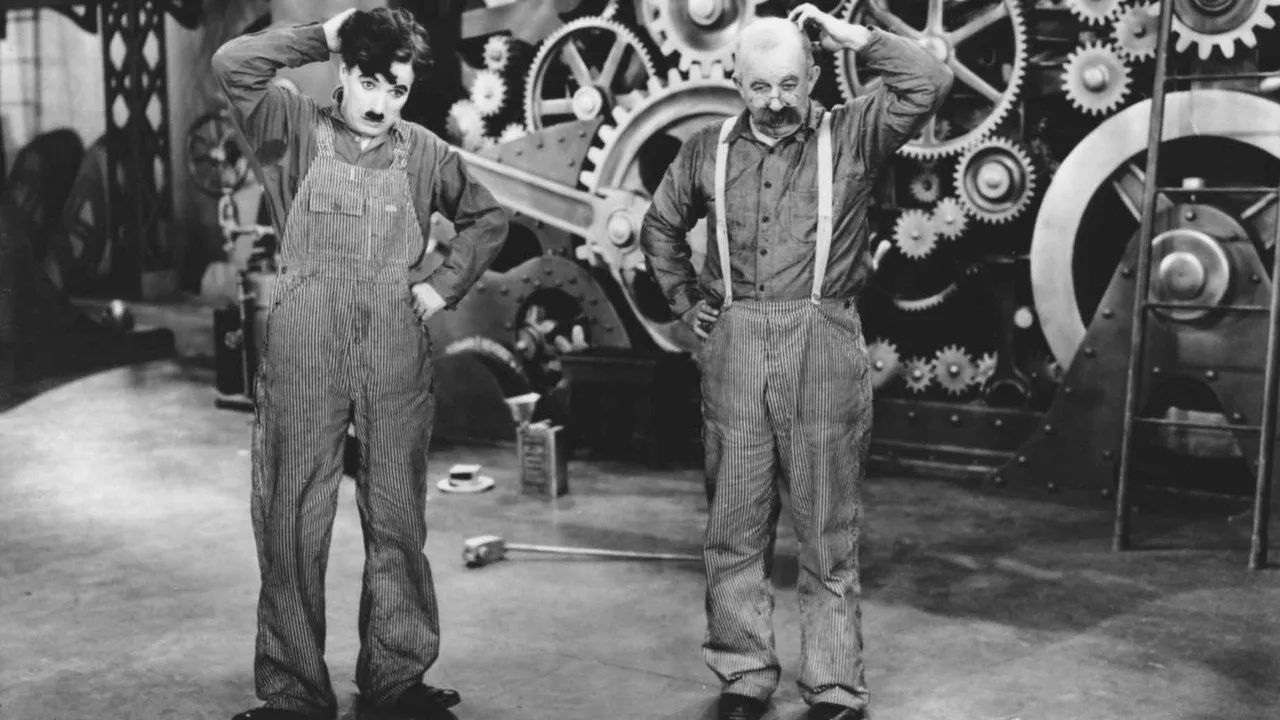
The Tramp tightens bolts nonstop until the pace literally drags him into the gears.
He is used to test a machine that feeds workers without stopping work, and it fails in every possible way.
The Tramp skates blindfolded on the edge of a drop he can't see; the drop was a matte painting.
He loses the cuffs with the lyrics and improvises the song in made-up gibberish: the first time his voice is heard.
Gallery
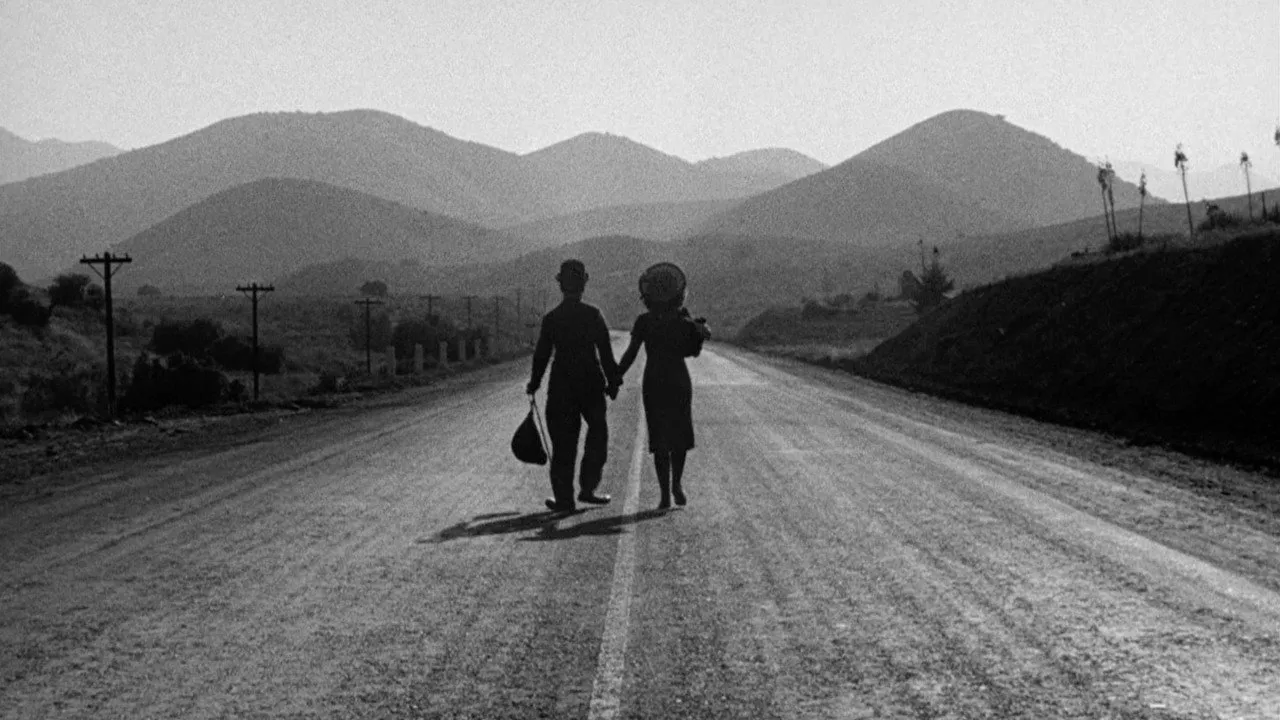
Stills: TMDb
True or false?
Chaplin wrote a dialogue script for Modern Times.
Connections in the catalog
In the great lists
| National Film Registry (1989) | Among the first 25 |
Awards
| National Board of Review: Top Ten Films |
Budget and box office
| Budget (1936) | $1,500,000 |
| Today's equivalent | ≈ $34.8 million |
| Box office | $1,400,000 |
Adjusted for inflation using the US CPI
Technical details and shooting
| Image | Black and white |
| Languages | Silent |
| Shooting | 11 October 1934 to 30 August 1935, a long shoot for the time |
| Frame rate | Shot mostly at 18 frames per second and projected at 24, which speeds up the action |
| Sound | Silent film with synchronized music and effects; Chaplin's voice is heard only in the final song |
| Music | By Chaplin; its love theme later became the song "Smile" |
| Origin | Inspired by the Great Depression and a conversation with Gandhi about technology |
Wikipedia (EN) · Wikipedia (ES) · Wikidata · IMDb · TMDb
Analysis prepared with AI assistance from these sources. Quotes are checked word for word against the original text. How we build these pages →